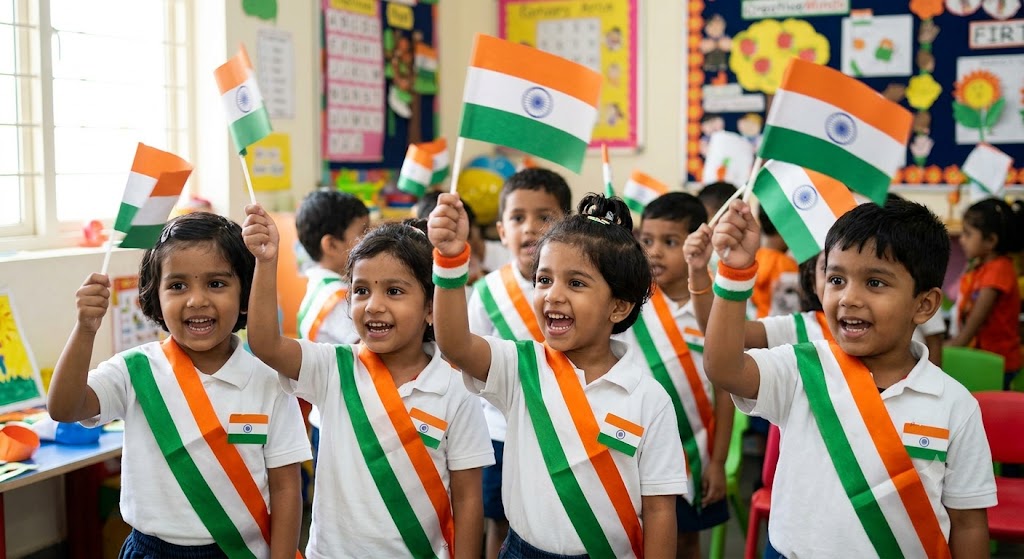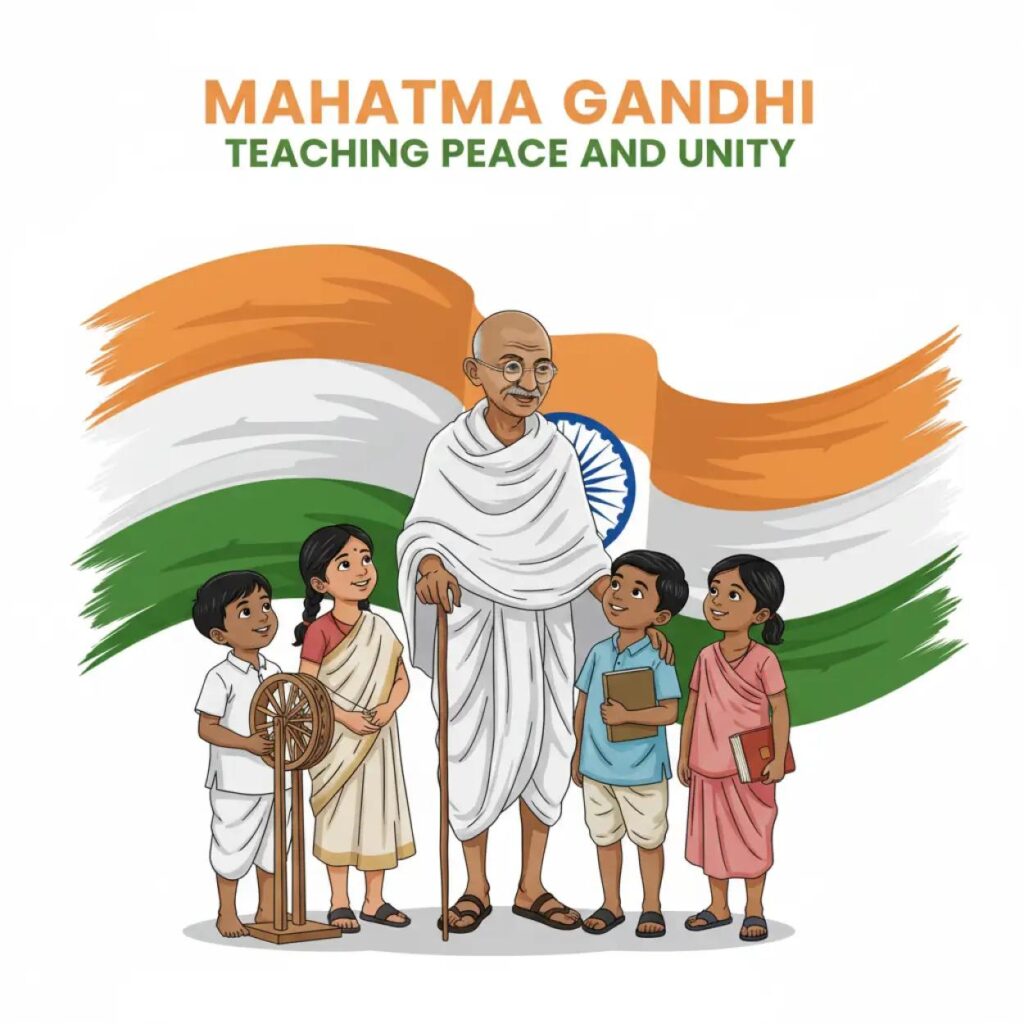
Every year on 2nd October, India observes Gandhi Jayanti, the birth anniversary of Mahatma Gandhi. Born on 2nd October 1869 in Porbandar, Gujarat, Mahatma Gandhi became one of the most influential figures in India’s freedom movement. His life was deeply associated with values such as truth, non-violence, simplicity, peace, self-discipline and service to others.
At Creative Minds PreSchool, Malur, occasions such as Gandhi Jayanti provide a wonderful opportunity to introduce young children to these values in a simple, age-appropriate and joyful way.
For preschoolers, Gandhi Jayanti does not need to be a complicated history lesson. Instead, it can become a day of stories, songs, colouring, creative activities and small acts of kindness that help children understand an important message: we can make our world better by being truthful, peaceful, kind and responsible.
Who Was Mahatma Gandhi?
Mahatma Gandhi, lovingly called Bapu, was born on 2nd October 1869. He played an important role in India’s struggle for independence and became internationally known for his philosophy of non-violence and peaceful action. His approach, known as Satyagraha, emphasised truth and peaceful resistance.
For little children, however, Gandhi’s story can be introduced through ideas they already understand.
We can tell them:
“Gandhiji believed in telling the truth, being kind to others, solving problems peacefully and helping people around him.”
These are not just historical ideas. They are values that children can practise every day — at school, at home and while playing with friends.

Gandhi Jayanti and the Value of Truth
One of the most important values associated with Mahatma Gandhi is Satya, or truth.
Preschool children are still learning how to express their feelings, understand consequences and communicate with others. Gandhi Jayanti can therefore become an opportunity to explain truthfulness through simple examples.
A teacher might ask:
“What should we do if we accidentally break a toy?”
Instead of hiding it or blaming someone else, children can learn to say:
“I broke it by mistake. I am sorry.”
This simple example helps children understand that telling the truth takes courage.
Teachers can also use short stories, puppet shows and classroom conversations to demonstrate that being honest helps build trust. Children can learn that they do not have to be perfect; what matters is being honest about their actions and learning from their mistakes.
At Creative Minds PreSchool, a simple “Truth Tree” activity could be introduced. Each child can add a paper leaf containing one simple promise, such as:
- I will tell the truth.
- I will share my toys.
- I will help my friends.
- I will keep my classroom clean.
- I will use kind words.

Learning About Ahimsa — Being Gentle and Peaceful
Another important teaching associated with Gandhi is Ahimsa, or non-violence. Gandhi’s philosophy of non-violent action became influential far beyond India, and the United Nations observes 2nd October as the International Day of Non-Violence.
For preschoolers, Ahimsa can be explained very simply:
“We should not hurt people, animals or living things. We should use gentle hands and kind words.”
Children can learn that pushing, hitting, shouting or hurting someone is not the right way to solve a disagreement.
Instead, they can practise saying:
“Please stop.”
“Can I have a turn?”
“Let’s share.”
“I am sorry.”
“Can we play together?”
These little phrases can help children develop peaceful ways of handling everyday situations.
Teachers can organise a “Kind Hands, Kind Words” activity where children draw or colour pictures showing ways of being helpful and gentle. It can be a beautiful way of connecting Gandhi’s message of non-violence with children’s everyday experiences.
The Charkha: A Symbol Children Can Discover
One of the most recognisable symbols associated with Mahatma Gandhi is the charkha, or spinning wheel.
The charkha can be introduced to preschool children as a symbol connected with self-reliance, simplicity and the use of Indian-made goods. Gandhi strongly supported Khadi and the idea of Swadeshi, encouraging people to value locally produced goods.
For children, the charkha can become a fun learning opportunity.
Teachers could show children a picture of a traditional spinning wheel and explain:
“Long ago, people used spinning wheels to make thread. Gandhiji used the charkha as a symbol of self-reliance.”
Children can then create their own paper charkha craft using cardboard, paper plates and safe classroom materials.
The activity can also encourage conversations about traditional Indian crafts and the importance of appreciating the work of artisans.

Gandhi Jayanti Can Also Be a Cleanliness Day
Cleanliness is another meaningful theme for Gandhi Jayanti. Gandhi placed considerable importance on sanitation and cleanliness, and India’s Swachh Bharat Mission was launched on Gandhi Jayanti in 2014.
For preschool children, this can be turned into a simple classroom habit rather than a lecture.
Teachers can encourage children to:
- Put waste in the correct bin.
- Keep their desks and activity areas tidy.
- Wash their hands properly.
- Keep toys back in their places.
- Avoid wasting paper.
- Help keep the classroom clean.
A small “Clean Classroom Challenge” can make the lesson exciting. Children can work together to arrange toys, collect paper scraps and organise their learning corners.
The purpose is not simply to make the classroom look clean for one day. It is to help children understand that cleanliness is a daily responsibility.

Fun Gandhi Jayanti Activities for Preschoolers
Gandhi Jayanti can be celebrated through activities that combine learning and creativity.
1. Gandhi Jayanti Colouring Activity
Children can colour a simple picture of Mahatma Gandhi, the Indian flag, a charkha or a peaceful village scene.
2. Dress-Up Activity
Children can come dressed in simple traditional Indian clothing. A few children may also dress up as Gandhiji using child-friendly costumes, round paper spectacles and a walking stick prop.
School celebrations across India often use such creative presentations to help children connect with Gandhi’s life and symbols.
3. Story Time with Gandhiji
Teachers can tell a short, simple story about Gandhi’s childhood or his commitment to truth. The story can end with a question:
“What would you do if you were Gandhiji?”
4. Kindness Circle
Children can sit in a circle and say one kind thing they can do for a friend, parent, teacher or family member.
5. Charkha Craft
Children can create a paper charkha using safe and colourful craft materials.
6. Cleanliness Activity
Teachers and children can spend a few minutes organising their classroom and learning why keeping our surroundings clean matters.
7. Peace and Friendship Song
A simple patriotic or peace-themed song can help make the celebration memorable and engaging.

What Can Children Learn from Gandhiji?
The most beautiful part of Gandhi Jayanti is that children do not need to understand every detail of history to learn from Gandhi’s values.
They can begin with small actions.
Truth — Tell the truth even when it is difficult.
Kindness — Help someone who needs support.
Peace — Solve disagreements without hurting others.
Cleanliness — Keep the surroundings neat.
Simplicity — Learn to value things without always asking for more.
Respect — Treat friends, teachers, family members and helpers with kindness.
Responsibility — Understand that even small actions can make a difference.
These lessons are particularly meaningful during the preschool years because children are developing their social habits, emotional understanding and sense of responsibility.
Gandhi Jayanti at Creative Minds PreSchool, Malur
At Creative Minds PreSchool, Malur, celebrations can be more than colourful events on the school calendar. They can become opportunities for children to learn values through experiences.
A Gandhi Jayanti celebration filled with stories, crafts, music, dress-up activities and simple classroom responsibilities can make history meaningful for young minds.
The children may not remember every historical date or event, but they may remember a much simpler message:
Tell the truth.
Be kind.
Do not hurt others.
Keep your surroundings clean.
Help your friends.
Live peacefully.
And these small lessons, repeated every day, can become meaningful habits as children grow.

A Small Message for Our Little Ones
Gandhi Jayanti reminds us that great changes can begin with very small actions.
For a child, changing the world may begin with sharing a crayon.
It may begin with helping a friend.
It may begin with putting a wrapper in the dustbin.
It may begin with saying “I am sorry.”
It may begin with telling the truth.
It may begin with choosing kind words instead of angry ones.
These simple actions may look small, but they are valuable lessons for growing minds.
As we celebrate Gandhi Jayanti on 2nd October 2026, let us remember Mahatma Gandhi not only as an important figure in India’s history, but also through the values that can be introduced to children every day — truth, peace, kindness, cleanliness and respect for others.
At Creative Minds PreSchool, Malur, may our little learners continue to grow with curious minds, caring hearts and gentle hands.
Happy Gandhi Jayanti!
Let us help our children learn that kindness is powerful, truth is valuable, and peace begins with each one of us.